



Carbon Fiber Recycling
HRC recycles carbon fiber at kiloton scale on its own patented line in Changshu, China, and turns the recovered fiber into recycled carbon fiber products: injection molding pellets, non-woven fabrics and thermoplastic felts for automotive, construction, wind energy and electronics. The process uses microwave heating, produces no chemical waste, and the fibers keep over 95% of their mechanical properties.
What is carbon fiber recycling?
Carbon fiber recycling recovers the fibers from production scrap and end-of-life composite parts. Unlike metals, a carbon fiber reinforced plastic (CFRP) part cannot be melted down: the cured resin has to be removed before the fiber can be used again. Industry estimates put the share of carbon fiber that ends up as waste during manufacturing at around 30%, so recycling is both an environmental and a cost question for every OEM that uses composites.
How does HRC's carbon fiber recycling process work?
- Microwave heating. The CFRP waste is heated to the resin cracking temperature in a short time by microwaves, which keeps energy use low.
- No chemical pollution. The rapid temperature difference between the inside and the outside of the part breaks up the composite structure without solvents and without solid or liquid waste.
- Properties retained. After the resin is cracked and removed, the recycled fibers retain over 95% of their mechanical properties.
- Kiloton scale. The self-built production line based on HRC's patented technology recycles at kiloton scale, which brings the recycling cost down while keeping material performance.
Recycled carbon fiber products
Recovered fiber is turned into regenerated intermediate materials and end products under the HRC Carbon Neutrality programme:
- Injection molding pellets: rCF reinforced thermoplastic pellets with strong mechanical properties for complex components in automotive, aerospace and consumer electronics.
- Non-woven fabric: made by dispersing, carding and needle punching the recycled fiber while keeping its length, for SMC and RTM materials, electromagnetic shielding and anti-static products.
- Thermoplastic felt: uniform fiber distribution and good mechanical properties for molded parts.
- End products: regenerated parts for transportation, construction and wind energy. The sustainability page shows the full closed loop.
Composite recycling solutions for manufacturers
HRC also builds recycling solutions for clients who generate composite waste: waste and material sorting, equipment and process planning, fiber quality testing, design of intermediate materials from the recovered fiber, and the development of recycled products with structural analysis, cost assessment and product testing. Our intermediate material development team formulates the recycled materials, and our production plants mold them into parts.
Why recycle carbon fiber with HRC?
- A closed loop inside one company: HRC designs the part, produces it, recycles it and makes the next material from the recovered fiber.
- Recycling line and Carbon Neutrality facility of 8,000 square metres at No. 1267 Southeast Avenue, Changshu, next to our automotive and aerospace production plants.
- Environmental management certified to ISO 14001:2015. HRC's circular economy practice was selected as a 2025 exemplary climate action case in the "Carbon Pathways to the Future" programme.
- Regenerated products that help automotive and construction clients meet their own sustainability targets without giving up performance.
Frequently asked questions
Can carbon fiber be recycled?
Yes. The cured resin is removed by heat or chemicals and the carbon fibers are recovered. HRC uses microwave heating, which removes the resin without chemicals and leaves fibers with over 95% of their original mechanical properties.
Do recycled carbon fibers lose strength?
Very little when the process is controlled. Fibers from HRC's line retain over 95% of their mechanical properties. They are shorter than virgin continuous fiber, so they are used in pellets, non-wovens and felts rather than in continuous-fiber laminates.
What does carbon fiber recycling cost?
It depends on the waste type, the volume and the product you want back. Recycling at kiloton scale on an energy-efficient microwave line keeps the cost per kilogram far below virgin carbon fiber. Send us the details of your waste stream for a quote.
Can HRC recycle composite waste from other manufacturers?
Yes. HRC develops recycling solutions for other manufacturers' composite waste: sorting, process planning, fiber testing and the design of recycled materials and products from the recovered fiber.
Where is HRC's carbon fiber recycling line?
In Changshu, Jiangsu, China, at the HRC Carbon Neutrality facility (Warehouse 1, No. 1267 Southeast Avenue, 8,000 square metres), close to our automotive and aerospace production plants. Reach the team through the contact page.
-
 Energy Efficient
CFRP is heated to resin cracking temperature in a short time via microwaves.
-
 No Chemical Pollution
Rapid internal and external temperature difference dismantles composite structure without solid or liquid waste.
-
 High Mechanical Performance Retention
Recycled fibers retain over 95% of mechanical properties after resin is cracked and removed.

-
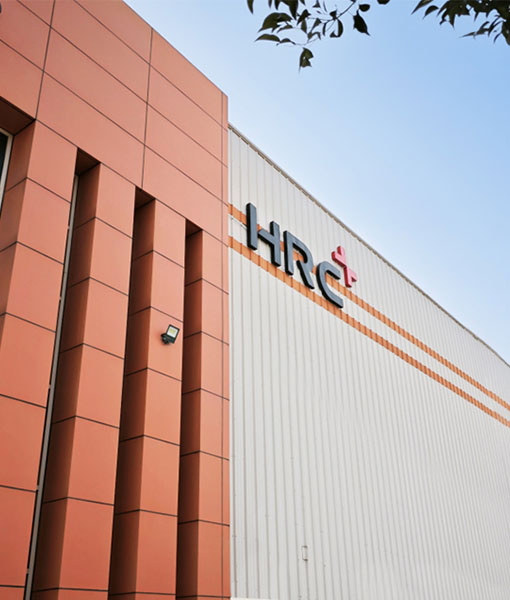
HRC Carbon Neutrality
HRC Carbon Neutrality represents the company’s commitment to building a lighter and greener future by implementing circular economy principles for CO₂ footprint reduction.
We offer regenerated carbon fiber intermediates and end products, serving industries such as automotive, construction and more, helping them achieve sustainability goals while enhancing product performance.
-

 Warehouse 1st, No.1267 Southeast Avenue, Changshu, China
-
 8,000m2
HRC Carbon Neutrality
-